A common question received by our technical service department is: How do you properly clean poured concrete?
When concrete is affected by grease, we recommend our Hot Stain Remover. For environmental staining issues, OneRestore® or HD Britenol are effective solutions. NMD 80® used as directed can also be used for maintenance cleaning applications. EaCo Chem offers a range of products designed to clean a variety of conditions present on concrete slabs.
However, another question often arises before the cleaning process begins. Imperfections in the concrete already visible may become more visible. The cleaning process does not create these flaws but instead can enhance pre-existing surface variations.
Concrete naturally generates heat during hydration, the chemical reaction that occurs as it cures. Proper curing practices, including the use of insulating blankets in cold conditions, help retain this heat and maintain the concrete temperature above 40°F for 24 to 48 hours. Keeping the slab above this critical threshold allows hydration to continue, enabling the concrete to develop proper strength and durability. It also allows the surface to have a uniform appearance.


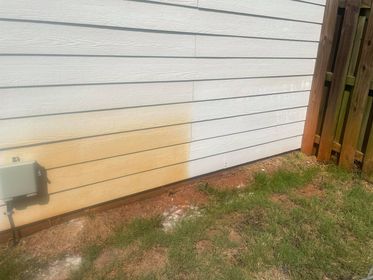
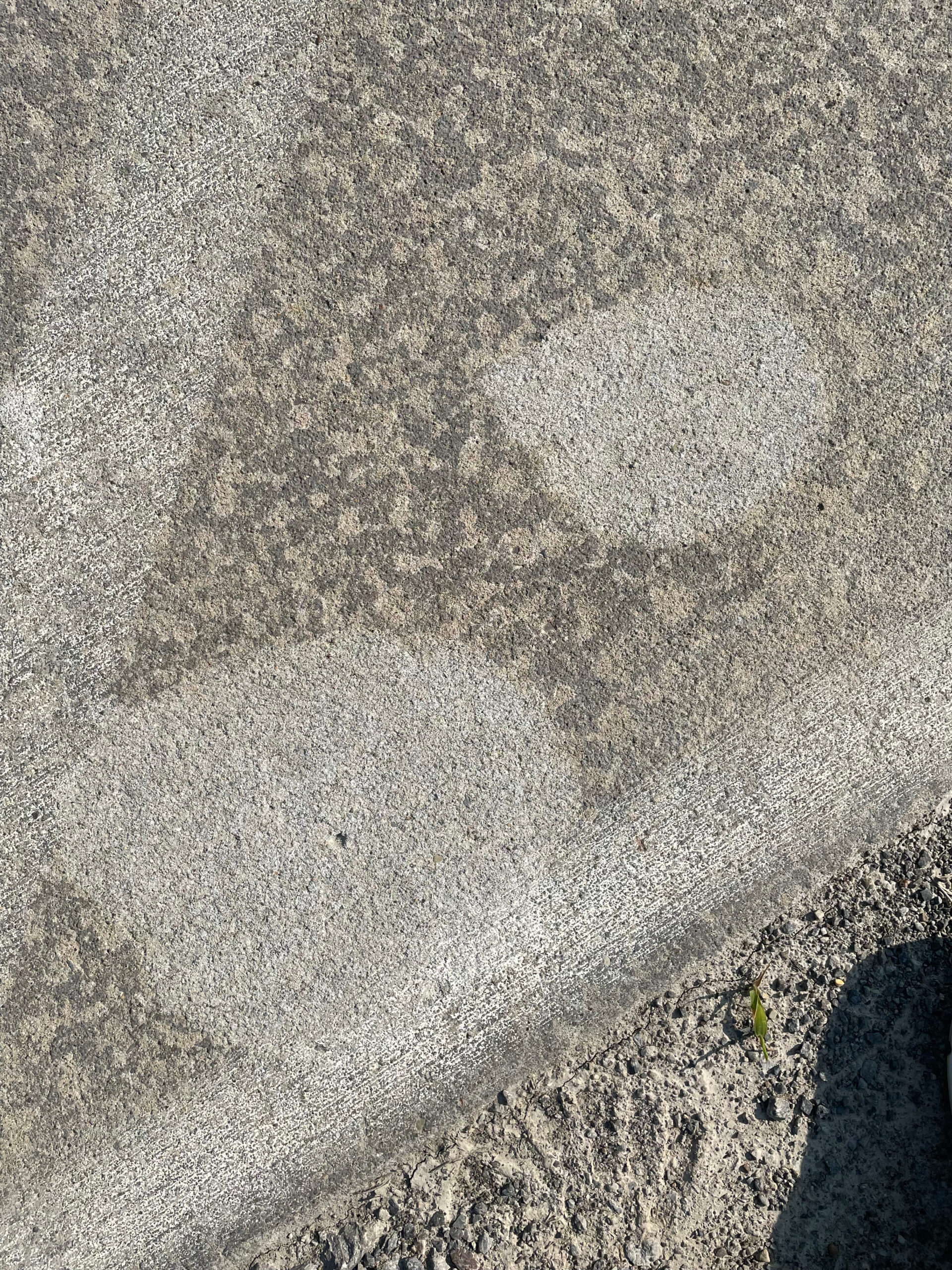
The photographs illustrate the appearance of a “modeled concrete surface” on the concrete slab located outside the entry doors of the EaCo Chem office. The lighter spots on the surface are where OneRestore® was applied.
This condition occurred because the concrete curing blanket was not properly secured and was displaced by wind. As a result, the temperature of the concrete slab dropped below 40°F during the critical initial curing period. Maintaining adequate temperature during this early curing phase is essential to ensure uniform hydration and proper strength development. When the slab temperature falls below the recommended threshold, uneven curing can occur, leading to surface discoloration and a mottled or “modeled” appearance.
The OneRestore® product that was applied successfully cleaned the surface; however, it did not correct the discoloration or modeled look caused by the improper curing conditions. This is because the issue is inherent to the curing process rather than a surface contaminant.
This type of condition can also occur when concrete is poured during high temperature conditions causing discoloration and aesthetic irregularities. In hot weather conditions, curing blankets can sometimes trap excessive heat and restrict proper moisture evaporation. This can also lead to discoloration and, in some cases, surface cracking.
None of our products can fix issues caused by an improper curing process. Talking with a concrete specialist could help better understand the situation. Staining could be an option, but even that would not be a guaranteed fix.
Not sure what EaCo Chem product to use on a tough job? Learn what cleaners to use with our Encyclopedia of Clean!
Then use our Distributor Locator to find an EaCo Chem distributor near you!